


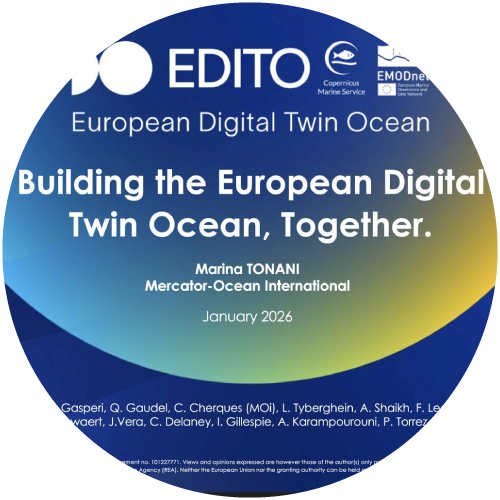
EDITO serves as the public infrastructure of the European Digital Twin Ocean, funded by the European Union. Our mission is to make ocean knowledge available to all, empowering decision-makers, researchers, innovators and citizens to access a wealth of ocean insights and tools, grow our shared knowledge, and act for the future.
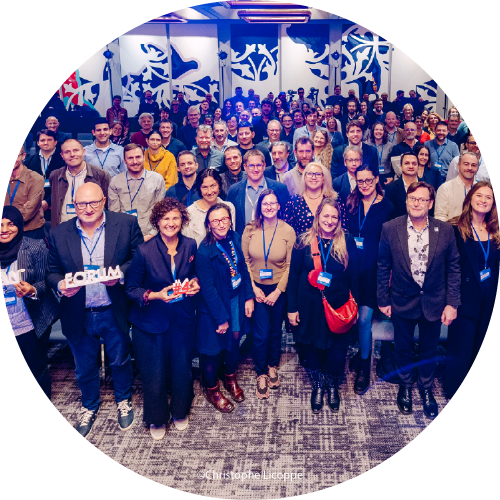
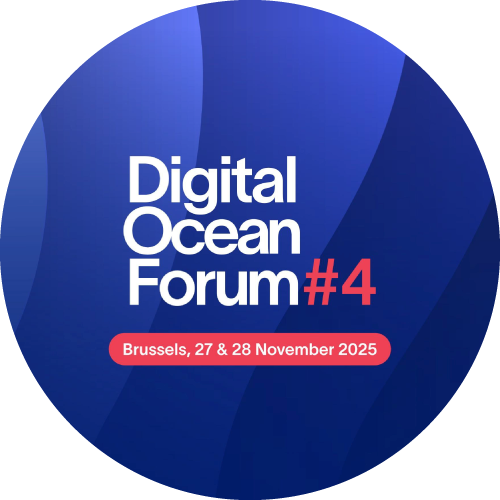
Welcome to EDITO Insights, our first issue of 2026! Last year closed with another productive edition of the Digital Ocean Forum, which invited European projects, initiatives and stakeholders involved in the co-creation of the European Digital Twin Ocean to meet, share ideas, and advance their plans. The official report from this event, as well as our video recap, are now available, and we invite you to explore these materials below.
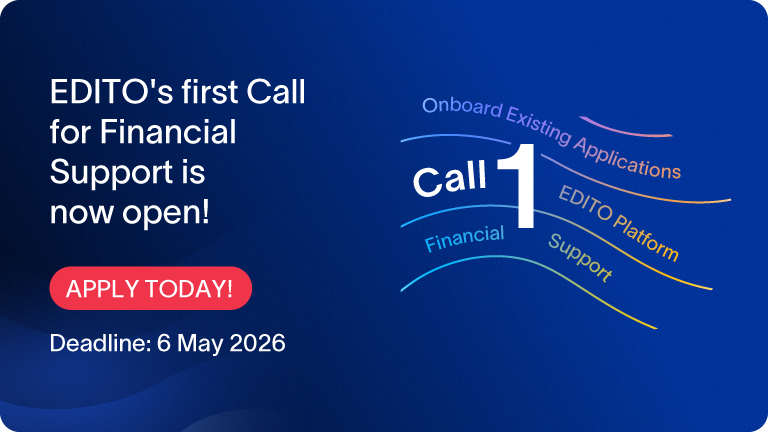
As the EDITO platform continues to upscale and evolve, we look forward to expanding the thriving network of ocean scientists, developers and research projects that are harnessing EDITO to support their work. We are thrilled that the first EDITO Call for Financial Support to Third Parties is now open towards that end, offering grants to selected European, national, regional or local projects to onboard their existing (final or close to final) applications, models, or datasets onto the EDITO platform. We can’t wait to receive your application! Read on for more information and how to apply.
Thank you for reading, and we look forward to continuing our shared mission of Building the European Digital Twin Ocean, Together. Fair winds and following seas!
Julia Vera
Lead Manager Business & Strategy, Seascape Belgium
EDITO Implementing Partner, on behalf of the EMODnet Secretariat
In our shared mission to grow the European Digital Twin Ocean platform and community, EDITO will offer €2 million in cascading grants to third parties. Call #1 focuses on existing (final or close to final) applications, models and datasets that are ready to be integrated into the EDITO platform. Projects developing interoperable applications or models that are relevant to ocean and coastal challenges are encouraged to apply. Deadline: 6 May 2026.
Explore the latest news from the European Digital Twin Ocean community
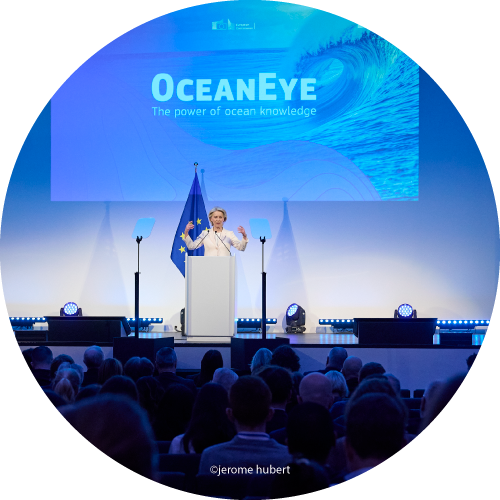
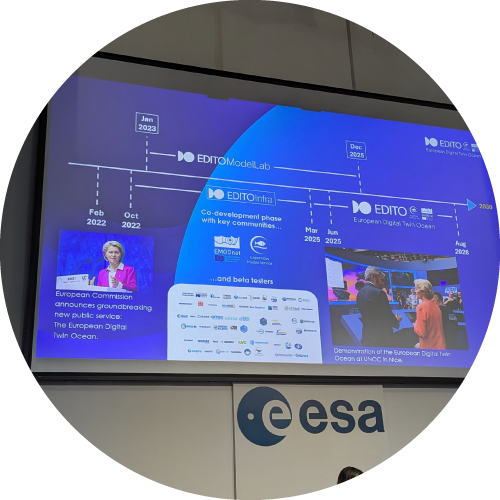
Last week, President von der Leyen laid out the ambition of OceanEye, “a major initiative to strengthen the EU’s leadership in ocean observation and unlock the full potential of our ocean.” Read more about this exciting initiative and why the European Digital Twin Ocean is a crucial tool for making OceanEye’s vision a reality.
DOF2025 revealed the impressive technology and dedicated community powering the European Digital Twin Ocean. Hear from some EDITO Community members about what’s been achieved so far, and what’s to come.
A full report on the 2025 Digital Ocean Forum is now available, highlighting key points, reflections and takeaways.
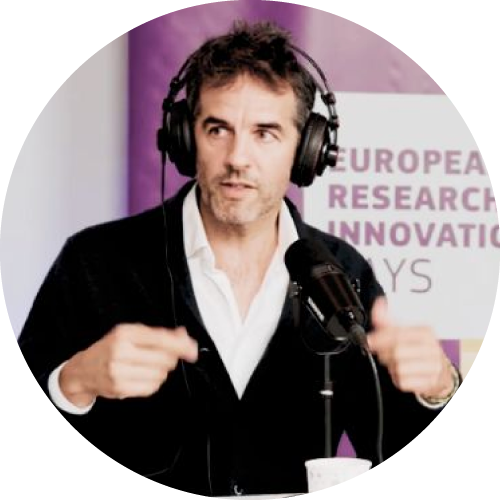
EDITO appears on a special episode of the European Commission’s CORDIScovery Podcast, discussing digital tools for ocean insights.
European Ocean Days
Brussels, Belgium, 2-6 March
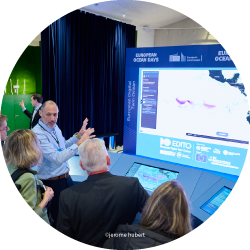
EDITO hosted an interactive exhibition all week, demonstrating tools to track ocean health, drive EU blue research and innovation, and enhance maritime security.
VLIZ Marine Science Day
Ostend, Belgium, 4 March
VLIZ and Seascape Belgium representatives presented the European Digital Twin Ocean and how it supports students, researchers and Early Career Ocean Professionals in their work.
Ocean Sciences Meeting
Glasgow, Scotland, 22-27 February
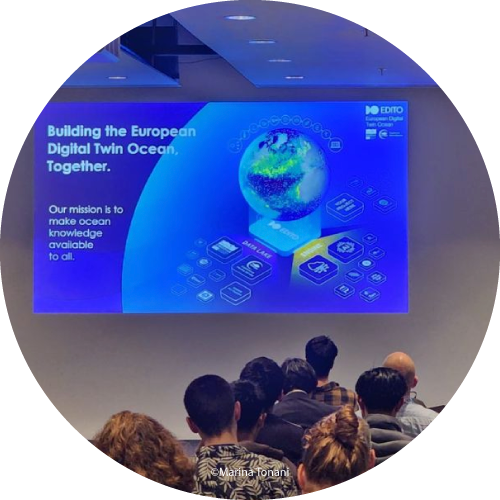
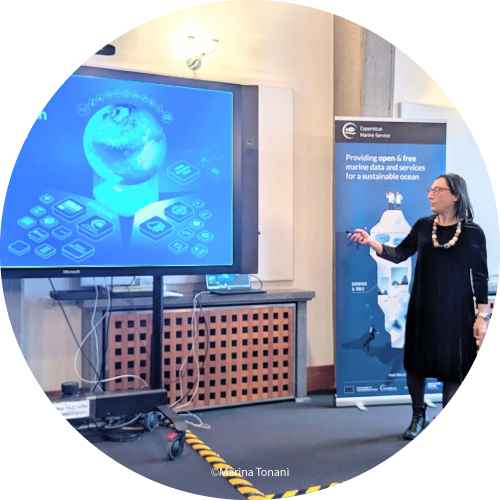
Marina Tonani (MOi) gave a keynote talk on EDITO and our mission to build a comprehensive, multi-scale digital representation of the ocean to support research, policy- and decision-making.
European Digital Ocean Systems Evolution 2028–2034 Workshop
Hamburg, Germany, 12 February
Marina Tonani (MOi) presented EDITO at this event aiming to produce a shared functional cartography of Europe’s Digital Ocean Systems, describing the system through its inputs, outputs, interfaces and innovation dynamics.
ESA Digital Twin Earth Components Open Science Meeting
Frascati, Italy, 2-4 February
Victoria Persson (MOi) presented a keynote on EDITO, spotlighting EMODnet and the Copernicus Marine Service as core European marine assets feeding data into EDITO and some exciting platform use cases.
European Space Conference
Brussels, Belgium, 27-28 January
Pierre Bahurel (MOi) spoke at the digital ocean expert roundtable and presented EDITO demonstrations. Alain Arnaud (MOi) joined the discussion on evolving needs and capabilities for Earth Observation, and Fabrice Messal (MOi) spoke about driving global innovation through inclusive practices.
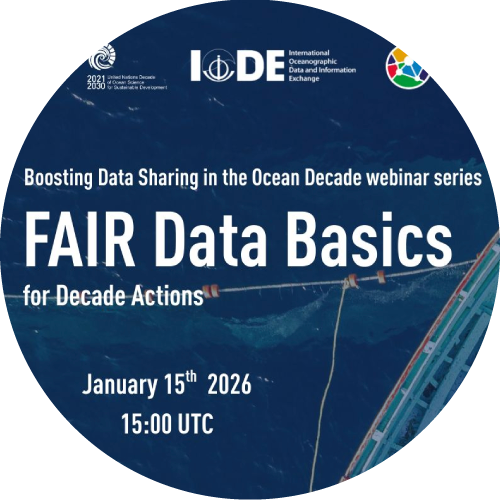
FAIR Data Basics for Decade Actions
Online, 15 January
Conor Delaney (Technical Coordinator of the EMODnet Secretariat, Seascape Belgium) shared EDITO’s contributions to the FAIR data landscape in this webinar providing a guide to Findable, Accessible, Interoperable and Reusable data.
DITTO Online Meeting
Online, 13-14 January
At this event showcasing and connecting international Digital Twins of the Ocean, Marina Tonani (MOi) shared the latest developments and aims of EDITO: a platform structured “in a way that everyone can use according to their needs.”
First meeting of EDITO Community Expert Group
Online
17 March 2026
The first meeting of our Community Expert Group will bring together representatives of the Copernicus Marine Service and EMODnet to share and discuss EDITO developments
EGU26
Vienna, Austria
2-8 May 2026
EuroGOOS Conference
Larnaca, Cyprus
18-20 May 2026
European Maritime Day
Limassol, Cyprus
21-22 May 2026
EU Space Days
Nicosia, Cyprus
26-27 May 2026
Connecting the DOTs: An exploratory study of global activities and collaboration potential for Digital Ocean Twins
A new report on the global landscape of digital twin ocean development has been published by the European Union. It reflects the growing momentum toward interoperable architectures and cross-border collaboration to address today’s challenges.
“Next year will be full of opportunities for the European Digital Twin Ocean to showcase its value”
Zoi Konstantinou, European Commission DG Mare, DOF2025
Community Expert Group Resources
About EDITO-Infra
About EDITO Model Lab
FAQs
This work is funded by the European Union under grant agreement no. 101227771. Views and opinions expressed are however those of the author(s) only and do not necessarily reflect those of the European Union or the European Research Executive Agency (REA). Neither the European Union nor the granting authority can be held responsible for them.
Privacy policy | Cookie policy | Website by Seascape Belgium

EDITO ModelLab European Digital Twin Ocean
The EDITO-Model Lab project expanded the numerical and simulation backbone of the European Digital Twin Ocean, delivering a comprehensive suite of modelling and simulation capabilities.
EDITO-Model Lab developed the next generation of ocean models, combining artificial intelligence and high-performance computing for integration into the EDITO public infrastructure, providing access to focus applications and simulations of different what-if scenarios.
To explore onboarded projects and applications, visit the EDITO Datalab.

Marine Environment Reanalyses Evaluation Project
MER-EP is an international initiative focused on evaluating marine environment reanalyses to maximise their potential for ocean and climate monitoring and prediction. The initiative develops and shares guidelines, methods, tools and best practices for using reanalysis data to monitor the state of the ocean and support applications such as AI forecasting models.
Ocean reanalyses are reconstructions of past ocean conditions created by combining ocean observations with numerical models through data assimilation techniques. These reanalyses can include information on ocean physics, waves, biogeochemistry and sea ice, providing a comprehensive picture of the changing ocean system.

To explore onboarded projects and applications, visit the EDITO Datalab.

Social-Ecological Analysis and Models for Digital Twin Ocean
SEADITO focuses on developing analytical methods and tools for the European Digital Twin Ocean . It integrates social-ecological models to establish a comprehensive decision support platform.
SEADITO is working to integrate interoperable, spatially explicit socio-ecological models into the EDITO Platform. It advances ecosystem-based management through FAIR data-driven decision-support tools and case studies in the Baltic Sea, North Sea, Mediterranean, and a Pan-European context. Its innovative platform includes visual demonstrators and a powerful Scenario Toolkit (WIST), enabling effective multi-actor processes.
To explore onboarded projects and applications, visit the EDITO Datalab.

Integration of innovative and reliable socio-ecological models and user-driven solutions into the European Digital Twin Ocean, to facilitate what-if scenarios and decision support, under a co-creation approach
SURIMI focuses on socio-ecological modeling to assess fisheries management impacts and provide user-friendly, scenario-based exploration of sustainable marine solutions. Its modular toolbox incorporates systems such as Ecopath with Ecosim, POSEIDON, and advanced AI-powered interfaces. Developed in close collaboration with stakeholders, SURIMI’s solutions ensure that real-world needs are addressed, promoting transparency, trust, and the long-term adoption of sustainable solutions.
SURIMI’s mission is to develop nine socio-ecological models for integration into the European Digital Twin Ocean.
To explore onboarded projects and applications, visit the EDITO Datalab.
Forecasting and Observing the Open-to-Coastal Ocean for Copernicus Users
FOCCUS is enhancing coastal monitoring and forecasting through the integration of high resolution observations, coastal models, and forecasting systems spanning the land coast ocean interface.
The project is onboarding coastal data products, models and applications to the EDITO platform to strengthen the coastal dimension of the European Digital Twin Ocean and the Copernicus Marine Service.
To explore onboarded projects and applications, visit the EDITO Datalab.

Coastal Climate Core Services
CoCliCo is an open source web platform informing users on present-day and future coastal risks with the goal of improving decision-making on coastal risk management and adaptation, by establishing an integrated core service dedicated to coastal adaptation to sea-level rise.
CoCliCo is the tool to plan and manage our response to sea-level rise. It is an interconnection of user engagement, information technologies for geospatial data management and lead science for risk adaptation.

To explore onboarded projects and applications, visit the EDITO Datalab.

Arctic Cross-Copernicus forecast products for sea Ice and iceBERGs
ACCIBERG is developing a new iceberg forecasting service and improving the quality of Arctic sea ice forecasts across Copernicus Marine and Climate Change services to enhance safety for maritime users navigating Arctic waters.
OpenBerg is a software tool developed by the ACCIBERG project and onboarded onto the EDITO platform to simulate the drift and fate of icebergs in the Arctic. Using data from Copernicus Marine Service, including ocean currents, waves, and wind conditions, OpenBerg can forecast individual iceberg trajectories and generate risk maps identifying areas where icebergs may be encountered. The service is being scaled up to automatically simulate the trajectories of thousands of icebergs detected through satellite observations, supporting improved iceberg forecasting and maritime safety in collaboration with the European Ice Services.
To explore onboarded projects and applications, visit the EDITO Datalab.

Dimensional data-driven reconstruction of the Mediterranean ecosystem for the study of biophysical interactions and their impact assessment
The objective of the 4DMED-SEA project is to develop a data-driven, 4D reconstruction of the Mediterranean Sea physical and biogeochemical state, exploit this information to further improve our understanding of the complex interactions between physical and biological processes at a broad range of temporal and spatial scales and explore options to transfer that knowledge into new solutions for society regarding the monitoring, restoration and preservation of the Mediterranean Sea Health.

To explore onboarded projects and applications, visit the EDITO Datalab.

European SEAs CLIMate Impact predictions through regional models
SEACLIM is advancing high-resolution decadal to multidecadal predictions of the marine environment to support climate resilience, ocean governance, and the blue economy.
By downscaling the latest global climate models and integrating them with regional ocean models from Copernicus Marine Service, SEACLIM provides detailed projections on ocean circulation, waves, sea ice, and marine biogeochemistry.
SEACLIM enables pre-operational decadal to multidecadal ocean predictions, developing new regional climate indicators to assess ocean health and coastal hazards. These insights will be integrated into the European Digital Twin Ocean, offering data-driven What-if Scenarios for policymakers, businesses, and coastal communities.
To explore onboarded projects and applications, visit the EDITO Datalab.

Advancing Black Sea Research and Innovation to Co-Develop Blue Growth within Resilient Ecosystems
BRIDGE-BS aims to advance the Black Sea’s marine research and innovation to co-develop Blue Economy pathways under multi stressors for the sustainable utilization of the ecosystem services.
BRIDGE-BS is designed to define a safe operating space for the Black Sea Blue Economy, ensuring that ecosystem boundaries are known and respected. To achieve this, the project has developed, for the first time in the region, an ensemble modeling framework that provides critical insights into the resilience of the Black Sea which has never been analyzed before. These models, supported by new ecosystem and socio-economic data, deliver results on ecosystem
state under different climate and human-driven pressures. The outputs feed into AI emulators, cumulative effect assessment tools, and “what-if” scenarios, while also supporting the development of
multi-stressor, multi-service Decision Support Tools and adaptive management strategies at both basinwide and Pilot scales. Living Labs across different regions provide additional stakeholder-driven input, reinforcing the co-design of European Digital Twin Ocean applications and enabling risk-based assessments that guide sustainable management of the Black Sea.
To explore onboarded projects and applications, visit the EDITO Datalab.

Social-Ecological Ocean Management Applications using Digital Ocean Twins
SEADOTs empowers sustainable ocean management by integrating social-ecological data into the European Digital Twin Ocean. This EU-funded initiative is aimed at transforming ocean management by merging cutting-edge ocean data with socio-ecological and socio-economic models.
SEADOTs further strengthens the European Digital Twin Ocean by developing next-generation socio-ecological models for inclusive, informed, and adaptive marine governance. Focusing on demonstration sites in the Norwegian North Sea, Southern North Sea, and the Baltic Sea, SEADOTs works hand-in-hand with policymakers, marine managers, and local stakeholders. Its interactive platform enables scenario-based policy exploration, supported by learning materials that foster digital ocean literacy.
To explore onboarded projects and applications, visit the EDITO Datalab.

Integration of biodiversity monitoring data into the Digital Twin Ocean
DTO-BioFlow unlocks currently inaccessible marine biodiversity data and integrates it into the European Digital Twin Ocean, transforming fragmented data into accessible knowledge to support marine research and monitoring.
DTO-BioFlow brings marine biodiversity data into action within the European Digital Twin Ocean. Through eight policy-relevant demonstrator use cases, the project integrates harmonised biomonitoring data with AI, models, analytical tools, and high-performance computing to address key marine ecosystem and policy challenges aligned with EU biodiversity objectives. By strengthening the operational biodiversity component of EDITO, DTO-BioFlow supports evidence-based decision-making for sustainable ocean management.
To explore onboarded projects and applications, visit the EDITO Datalab.
The Ocean Bulletin is an open web platform that helps maritime professionals plan routes at sea factoring meteorological and oceanographic conditions into predicted arrival times, fuel consumption, and CO₂ emissions. This application is meant as an EDITO integration aimed for a global audience, allowing users to simulate voyages anywhere on the global ocean, or between specific ports, and to compare performance across multiple types of vessels.
This application simulates a water column anywhere around the world, allowing users to explore the selected water column’s response to pressures.
This application provides real-time position of the low tide bathymetry line observed from satellites, which is useful for navigability and planning maritime operations.
The Global AI-Ocean Forecasting System (GLONET) provides an on-demand, fast, configurable and interactive framework that can be activated easily and quickly everywhere in Europe and in the world Ocean.
This application provides an accurate, resource-efficient and accessible tool for seasonal prediction of chlorophyll concentration. Chlorophyll concentration is an important indicator linked to marine ecosystem health, productivity and fisheries.
This application offers a web interface with a thematic approach to data, allowing users to create maps and graphs and to apply on-the-fly processing to deliver a comprehensive picture of the ocean on a given topic and/or area.
This application aims to improve the modeling of key tuna species spatial dynamics under the influence of essential ocean variables. It uses model projections from the Intergovernmental Panel for Climate Change (IPCC) to explore the future of tuna populations and their fisheries.
This application aims to support coastal and marine planning by enabling proactive responses to sargassum influxes across the Equatorial Atlantic and surrounding Exclusive Economic Zones (EEZs).
This application shows the impact of ocean observing systems -including in situ observations and satellites observations- on the ocean forecasts from the models. It provides access to information about observations assimilated to model (GLO12) and features to compare simulations with or without observations.
This application provides local information on people and buildings at risk in coastal areas, offering an assessment based on selected parameters, including “Shared Socioeconomic Pathways” (SSPs) scenarios, time scale and types of extreme events. This interactive experience about coastal risks and adaptation is powered by the Coastal Climate Core Service (CoCliCo) project.
Simulate the hydrodynamic impact of seagrass on coastal erosion to support coastal protection agency, decision makers and scientists to take nature-based decision. Demonstrator based on the What-if Scenario on NBS, developed by HEREON in the frame of the EDITO Model Lab project focused on the Wadden Sea (Germany) and the Songor Lagoon (Ghana).
This application simulates how limiting fisheries during certain months can lower the risk of impacting turtle populations. Harnessing turtle drift simulations developed with Copernicus Marine products, and using EDITO, the application demonstrates how ocean knowledge and modelling can be used to protect biodiversity.
This application provides information on the exposure of local regions to plastics coming from terrestrial origin, including level of exposure, origins and travel time. It provides “what-if” scenario options to examine the effect on the local exposure footprint of potential reductions of plastic emissions at (distant and local) source.
This application presents the EU infrastructures -the in situ and satellite observing systems- underpinning the development of the EU Digital Twin Ocean and the stakeholders involved.