


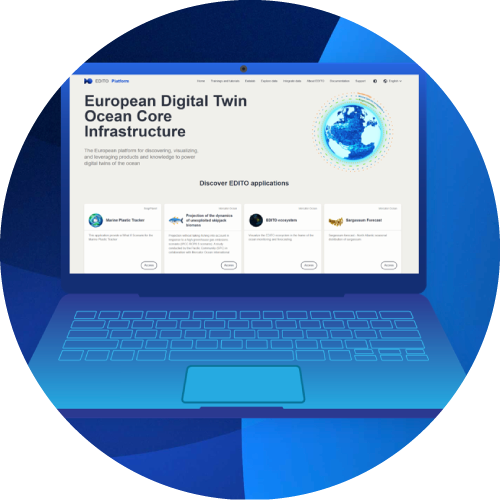
EDITO serves as the public infrastructure of the European Digital Twin Ocean, funded by the European Union. Our mission is to make ocean knowledge available to all, empowering decision-makers, researchers, innovators and citizens to access a wealth of ocean insights and tools, grow our shared knowledge, and act for the future.
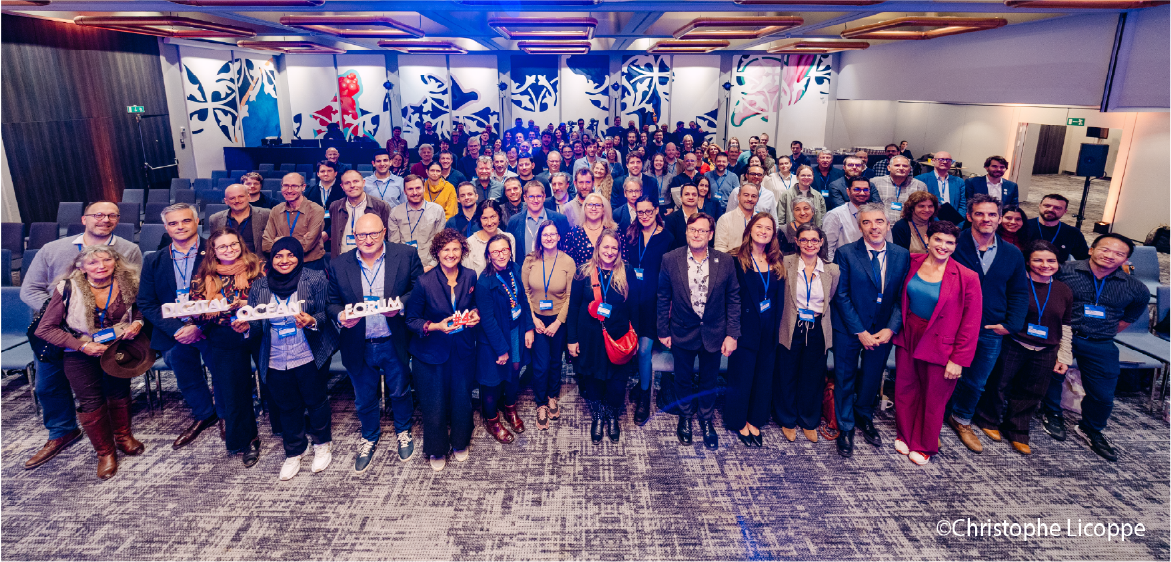
Welcome to the December issue of the EDITO newsletter! This edition arrives in the wake of the Digital Ocean Forum 2025, a truly energising milestone for the co-development of the European Digital Twin Ocean. DOF2025 was an opportunity to learn about key marine knowledge and policy developments, and for the EDITO community to connect. Contributions from European stakeholders showcased how EDITO contributes to the EU Ocean Pact, the Global Gateway, and the UN Decade of Ocean Science for Sustainable Development, while platform demos, technical workshops, and user testimonies illuminated exciting services already available on EDITO and the innovative projects onboarding their digital twins, apps, and other assets to the platform.
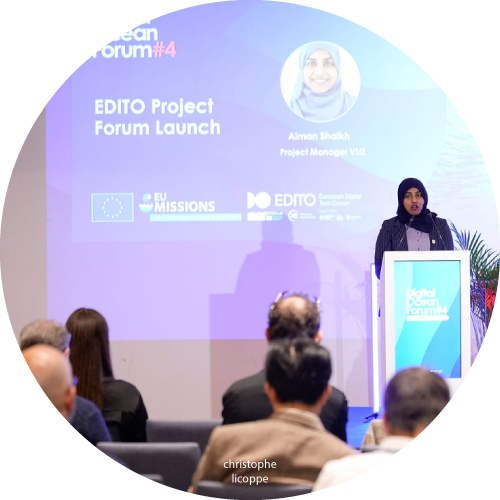
Yet the most powerful outcome of DOF was the sense of the European Digital Twin Ocean ecosystem expanding and cementing. Community building is a central aim of this phase of the EDITO project — and to this end, we were thrilled to announce the launch of the EDITO Project Forum. The Forum is set to become an inclusive, collaborative space to connect and support European, national, and local projects who are contributing to the co-creation of European Digital Twin Ocean. Members will be invited to regularly exchange experiences, share ideas, and provide feedback, thus building a network that facilitates co-creation, enables knowledge sharing, channels user input, and amplifies the visibility of all projects and efforts involved.
Registration to the Forum will open in the New Year, so stay tuned! In addition, our first call for funding was announced, which will be key in supporting projects that utilise and contribute to EDITO. You can read more about these and other exciting developments below.
Thank you for reading, and let’s continue to Build the European Digital Twin Ocean, Together!
Aiman Shaikh
Project Manager, Data Centre, Flanders Marine Institute (VLIZ)
In our shared mission to grow the European Digital Twin Ocean platform and community, EDITO will offer financial support to selected European, national, regional or local projects to onboard their existing applications, models, or datasets onto the EDITO platform. Join us for an information session to learn more about the opportunity and application process.
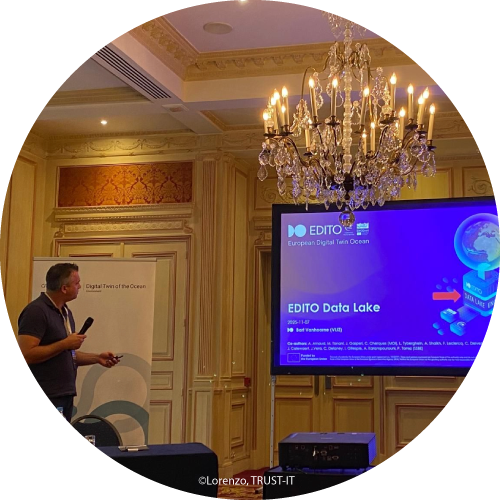
The Digital Ocean Forum 2025 gathered high-level representatives, policymakers, innovators, researchers and more to explore developments and opportunities in the mission to Build the European Digital Twin Ocean, Together. A full report will be available in 2026.
Explore the latest news from the European Digital Twin Ocean community
At the Digital Ocean Forum 2025, the launch of the EDITO Project Forum was announced: an inclusive space to connect and support all European, national, and local projects who are contributing to the co-creation of the European Digital Twin Ocean.
The EU-funded project EDITO-Model Lab (2022-2025) equipped the EDITO platform with next-generation numerical models, applications, and simulation tools. Explore how the communities engaged during this period continue to play a crucial role in the co-creation of the European Digital Twin Ocean.
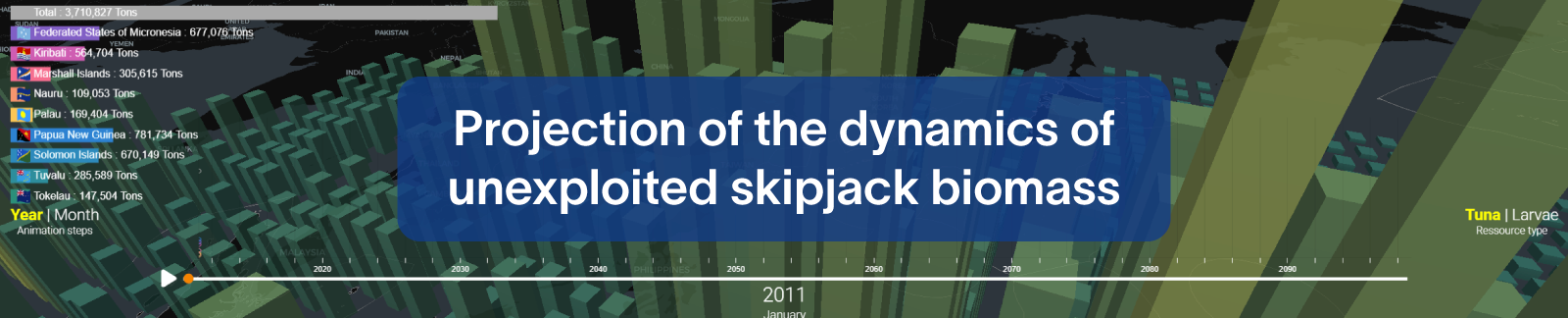
An application now available as a demo on EDITO reveals information about the behaviour of skipjack tuna under different climate conditions, while offering understandings of marine spatial management, the effects of natural variability, and climate change impacts.
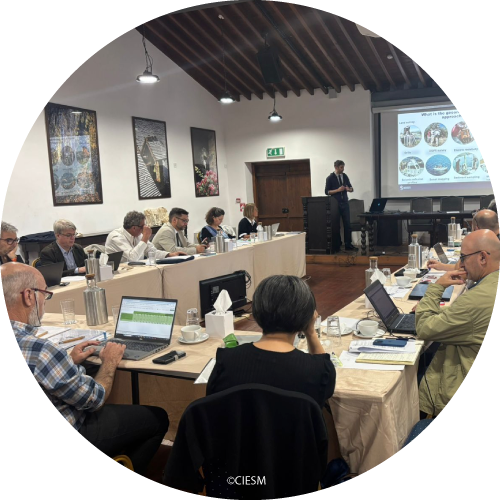
Building Coastal Knowledge – CIESM Workshop 54
Cyprus, 2-5 October
EDITO was presented at this interdisciplinary event, discussing data sharing, coordination, and how the scientific community can create interoperable resources.
NOOS Annual General Meeting
Dublin, Ireland, 7 October
EDITO was presented during a session on data and forecasting services, highlighting the capacity of its infrastructure.
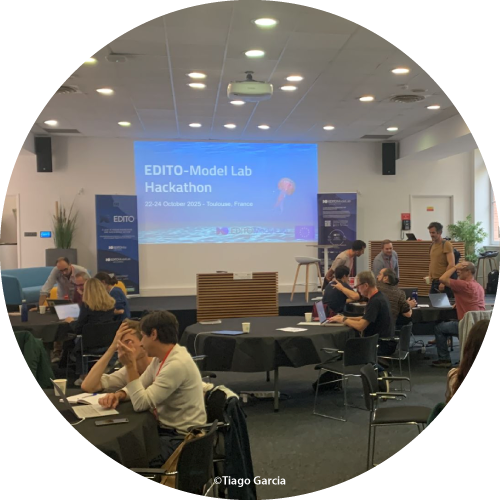
EDITO-Model Lab Hackathon
Toulouse, France & Online, 22-24 October
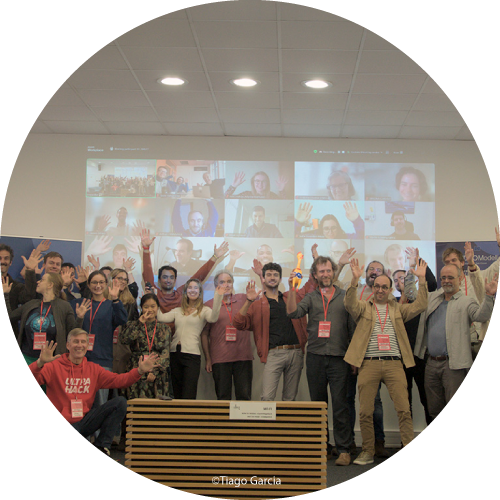
The Hackathon wrapped up with an intense 3-day sprint in which participants tested EDITO tools and contributed to the creation of Focus Applications.
EU4Ocean data training for ECOPS
Online, 21-23 October
This workshop sought to equip early career ocean professionals with skills to contribute to equitable, transparent marine data systems. Speakers emphasized EDITO’s role in the marine science and data landscape and its contributions to ocean management.
Blue Cloud Hackathon
Brussels, Belgium, 4-6 November
The EDITO team introduced participants to the platform, supporting diverse teams who harnessed EDITO’s technology to develop solutions to real-world problems.
5th EU Blue Parks Community Workshop
Online, 19 November
EDITO was presented at a session on the impact of projects that contribute to marine protection and key steps needed for replication and growth.
EMODnet Open Conference
Brussels, Belgium, 25-26 November
A demo of the EDITO platform was displayed to attendees of the EMODnet Open Conference – the in situ data component of EDITO – inviting hands-on engagement.
EDITO Training for MonGOOS/EuroGOOS Workshop
Lisbon, Portugal, 4 December
Members of the MONGOOS / EuroGOOS network were guided through the EDITO platform, including a demo of EDITO’s Validation Toolbox for validating model outputs.
European Science Diplomacy Conference
Copenhagen, Denmark
17-18 December
European Space Conference
Brussels, Belgium
27-28 January
Ocean Sciences Meeting
Glasgow, Scotland
22-27 February
European Ocean Days
Brussels, Belgium
2-6 March
VLIZ Marine Science Day
Ostend, Belgium
4 March
EMODnet VISION 2035
EMODnet – the in situ data component of EDITO – launched its VISION 2035, sharing the community’s view on EMODnet’s service evolution over the next decade.
New Copernicus Datasets
Copernicus – the satellite data component of EDITO – introduced news and updated products in its latest catalogue to address key ocean challenges.
“The European Digital Twin Ocean is an incredible tool.”
Ursula von der Leyen, European Commission President
The Ocean Bulletin is an open web platform that helps maritime professionals plan routes at sea factoring meteorological and oceanographic conditions into predicted arrival times, fuel consumption, and CO₂ emissions. This application is meant as an EDITO integration aimed for a global audience, allowing users to simulate voyages anywhere on the global ocean, or between specific ports, and to compare performance across multiple types of vessels.
This application simulates a water column anywhere around the world, allowing users to explore the selected water column’s response to pressures.
This application provides real-time position of the low tide bathymetry line observed from satellites, which is useful for navigability and planning maritime operations.
The Global AI-Ocean Forecasting System (GLONET) provides an on-demand, fast, configurable and interactive framework that can be activated easily and quickly everywhere in Europe and in the world Ocean.
This application provides an accurate, resource-efficient and accessible tool for seasonal prediction of chlorophyll concentration. Chlorophyll concentration is an important indicator linked to marine ecosystem health, productivity and fisheries.
This application offers a web interface with a thematic approach to data, allowing users to create maps and graphs and to apply on-the-fly processing to deliver a comprehensive picture of the ocean on a given topic and/or area.
This application aims to improve the modeling of key tuna species spatial dynamics under the influence of essential ocean variables. It uses model projections from the Intergovernmental Panel for Climate Change (IPCC) to explore the future of tuna populations and their fisheries.
This application aims to support coastal and marine planning by enabling proactive responses to sargassum influxes across the Equatorial Atlantic and surrounding Exclusive Economic Zones (EEZs).
This application shows the impact of ocean observing systems -including in situ observations and satellites observations- on the ocean forecasts from the models. It provides access to information about observations assimilated to model (GLO12) and features to compare simulations with or without observations.
This application provides local information on people and buildings at risk in coastal areas, offering an assessment based on selected parameters, including “Shared Socioeconomic Pathways” (SSPs) scenarios, time scale and types of extreme events. This interactive experience about coastal risks and adaptation is powered by the Coastal Climate Core Service (CoCliCo) project.
Simulate the hydrodynamic impact of seagrass on coastal erosion to support coastal protection agency, decision makers and scientists to take nature-based decision. Demonstrator based on the What-if Scenario on NBS, developed by HEREON in the frame of the EDITO Model Lab project focused on the Wadden Sea (Germany) and the Songor Lagoon (Ghana).
This application simulates how limiting fisheries during certain months can lower the risk of impacting turtle populations. Harnessing turtle drift simulations developed with Copernicus Marine products, and using EDITO, the application demonstrates how ocean knowledge and modelling can be used to protect biodiversity.
This application provides information on the exposure of local regions to plastics coming from terrestrial origin, including level of exposure, origins and travel time. It provides “what-if” scenario options to examine the effect on the local exposure footprint of potential reductions of plastic emissions at (distant and local) source.
This application presents the EU infrastructures -the in situ and satellite observing systems- underpinning the development of the EU Digital Twin Ocean and the stakeholders involved.